
The Owl Catcher

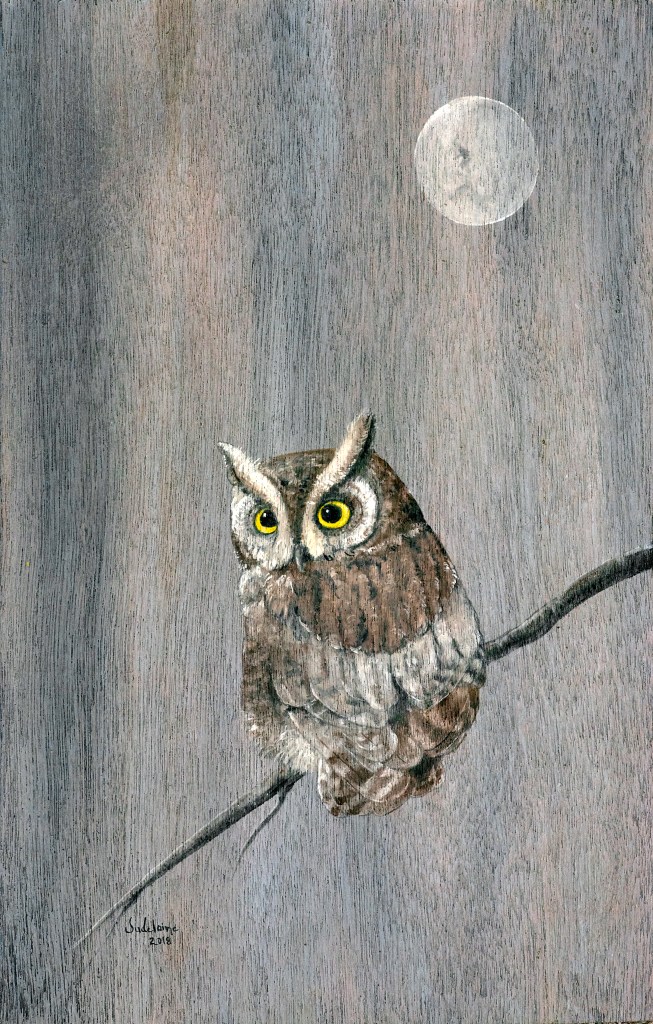
Oil Painting of a Screech Owl Painted on A Wooden Panel by Author

The child dragged a five-foot ladder as she walked the grassy path between a ripened cornfield and the bank of a slow-moving river. The child’s foraging bag hung from her shoulder and in the bag was a pair of her father’s work gloves. She wore a faded cotton dress and was walking barefoot. The year was 1955 and the child was nine years old. This was a time when little girls wore dresses, even little girls who climbed trees and caught frogs along muddy shorelines. 

The child had walked this path at sunrise when dew clung to blades of grass, and her destination then as now was the same. She leaned the ladder against the trunk of a dead oak and carefully climbed each rung until she was level with a hole, a hole large enough for an arm to reach inside. When she visited the tree earlier, she had knocked loudly with a knuckled fist and had placed her ear against the trunk to listen. The occupant clicked a reply, and the child smiled and said aloud, “I’ll be back.

Now, balancing herself on the ladder, feet spread and leaning her body against the trunk, she pulled on her father’s gloves before reaching with her right hand into the hole. When she touched the soft body at the bottom of the hole, a thrill raced through her fingers and into her heart. “Don’t worry,” she whispered, as she gently lifted a tiny screech owl from its home. “Don’t be afraid. It’s just me. Remember?”

Still leaning against the gnarled trunk, she cupped the small owl with both hands while stepping slowly down the ladder to the ground. The little creature stared at her with startled eyes, and bit fiercely at the work gloves. While blowing gently in the face of the little owl, the child soothed, “I won’t hurt you. You don’t have to bite,” and the owl stopped biting.  

Leaving the ladder leaning against the tree, the child walked hurriedly home. There, she placed the little owl in a cage, one of her mother’s empty canary cages.  It hopped to a perch and stared at her through large black pupils set in golden irises. Its feathers were several shades of brown, light and dark shades that formed patterns, with white under feathers.  

The child carried the cage to the garden where her mother was picking the season’s last green beans and tomatoes. The mother bent and looked into the cage, “Ah, your friend,” she said softly. The child knelt and looked closely at the little owl, and the mother knelt beside her. 

“Isn’t she cute?” the child whispered excitedly. 

“Yes,” her mother agreed, and then added, “Look, her feet are covered with feathers, and she has little feather horns.” 

“She looks angry,” the child said softly. 

“The feather pattern above her eyes makes her look that way,” her mother replied, nodding. 

The two sat for several minutes studying the small owl, then the mother returned to picking green beans. The child sat quietly next to the cage. She felt somehow connected to the little bird. She knew it was a wildling, that she couldn’t keep it, that it needed to hunt at night for food, and that it needed to spread its wings and fly. Still, she felt comforted just knowing it was alive and that it knew how to fly, that it knew how to find its own food, that it knew where its home was. This little owl and she shared something. They shared life.

“I think it’s time,” the mother directed.

 “I know. It’s time to return her to her home,” the child replied. 

Her mother answered with a smile.

The child carried the caged owl back to its home tree. After setting the cage on the ground next to the ladder, she gently lifted the small bird with a gloved hand and then carefully climbed while leaning into the ladder and graspingone rung at a time with her free hand. She placed the little owl inside its hollow oak. “There, you’re home,” she assured. 

While still standing on the ladder, the child looked across the cornfield to a line of orange and golden maple trees. The sky was a glorious blue, and the song of cicadas, warmed by the autumn sun, filled the air. She leaned close to the opening of the little owl’s home and whispered, “Thank you.”

Playing with Dead Rats: Searching for Humanbeingness

During lunch break, a group of teachers, all women, had gathered in the lounge to savor cups of hot coffee, check out catalog bargains, and talk about home and school. In one of the conversations, a second-grade teacher shared that several little girls in her class regularly brought Barbie and Ken dolls to school. She remarked that their play episodes mirrored the drama of TV soap operas, and her comments sparked a lively conversation about the loss of innocence, about premature sophistication, and about the powerful influence of television. 

The conversation also led teachers to reminisce, and they shared their experiences with dolls, baby dolls mostly. They talked of dressing them, putting them to bed, playing school and teaching them. They spoke of favorite dolls, described how they looked, and recalled their names. The conversation triggered memories for me also, and so I shared.          

“I really didn’t like store bought dolls,” I explained. “They were never real enough for me. You see, my father was a trapper. Each winter morning, he would leave the house before daybreak to check his traps and would return home around breakfast. I remember eagerly waiting for his return, waiting for the sound of him kicking snow off his boots outside the kitchen door. If when he stepped inside, he smiled and nodded, I knew that there would be a baby muskrat, one drowned in a trap but too small to skin for its pelt. So, I would hurry to his hunting jacket and search its pockets for the little furry creature that would become my doll for the day. A muskrat baby was a perfect doll. I would diaper it, would cut a hole in little squares of cloth for its tail – it would actually mess its diaper, and if I pried an eyelid open, there was a real eye inside.” 

I was so engaged with relaying this treasured childhood memory, that I was unaware of how silent the room had become. My story was abruptly ended when a teacher gasped, “Oh my dear! She played with dead rats as a child!”

“They weren’t dead rats,” I defended. “They were clean, silky young muskrats, and I would only play with them for one day. They never smelled.” The looks of horror registering on listener’s faces cautioned me not to relay that too much handling caused blood to ooze out of the tiny nose. Neither did I explain that I knew Papa would feed the carcass of “my doll” to the dogs at the end of the day.

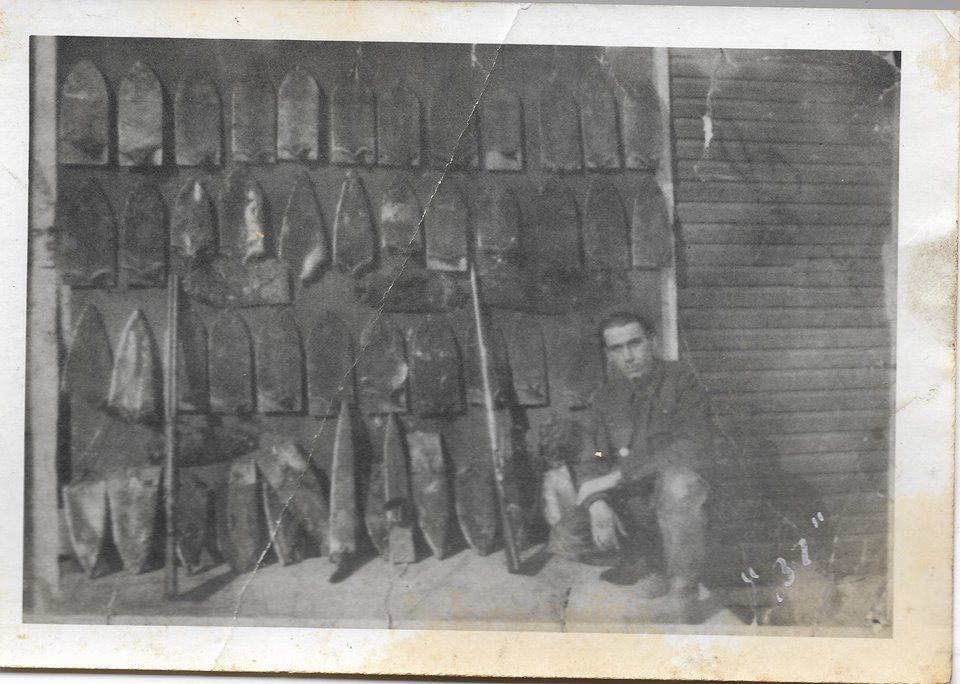
Prior to this conversation, I had never considered the idea of handling the carcasses of dead muskrats anything but a reasonable act. As a child I often watched my father skin-out pelts in the main room of our home, in a corner away from the wood stove. He would, having hung a muskrat head down suspended from the ceiling on two wires, one through each hind paw, carefully slit around the tail and hind legs and then skillfully pull the skin off as though turning a glove inside out. Papa sold the pelts. This was how he made money in winter. Muskrat pelts were what made Christmas gifts possible. 

“Now we understand,” one teacher blurted out. “We understand why you are the way you are.”

I did not consider this comment an insult. I knew that my colleagues regarded me as a creative and successful Gifted and Talented educator. But, during the fleeting moments of this interchange, I realized that my early years differed drastically from those of my peers. What I grew up believing to be a wonderful experience, one of the fondest of my childhood, was being viewed with disgust and misunderstanding. Isolated from the context of my family life, using a dead baby muskrat as a doll became playing with the carcass of a dead rat.   

Though time has distanced me from this conversation and the stories shared by my fellow teachers have been forgotten, the emotional impact of the experience will remain with me forever. I had always thought that my childhood was different, but not very different. The opportunity to reminisce about a shared experience, playing with dolls, affirmed likeness. I, like the other teachers, played with dolls; it was just that my dolls were young muskrats, dead young muskrats.  

At the time of the conversation, shock and horror communicated by my colleagues isolated me for several moments. In that isolation, I was able to step away from myself and view my memory from a different perspective. I understood the teachers’ horror and attempted clarification to gain their understanding, but I also knew the circumstances of my childhood and defensively refused to compromise my memory. This attempt to uncompromisingly clarify left me speechless, and I sat in silent reflection. Though my childhood was unique, I had really never considered myself culturally different, but this talk of dolls had forced me to consider the error of my assumption. It also illuminated another reality, my peers, having never had the opportunity to play with silky muskrats, would never appreciate the pleasure of that experience. I came to realize that I was of an “other culture”, and realization of my “otherness” allowed me the opportunity to reflect on my perspective in its relationship to a different perspective. To this day, I consider my reflection during this conversation about dolls and dead rats an awakening.

Herein lies the purpose behind sharing this story, a purpose that might not appear to follow logically. I assumed that others would have no difficulty relating to my childhood memory. As strange as it may seem, I had never considered that playing with a muskrat carcass would be considered offensive. I had never had reason to question the family culture in which I had been socialized. Now, after my awakening, I propose that one reason racial schisms exist and threaten to deepen is because members of separate cultures view other culture members as “different” and rarely consider the shared values and beliefs that underlie differences – the teachers heard my story and responded with repugnance, and I listened to their responses through my dual-culture, my childhood memories as well as common beliefs about dead animals. I understood their repugnance yet treasured my memory. I could have been hurt by this conversation, by assumptions that my childhood was deprived, even depraved, but I knew differently, and I also knew that my colleagues and I shared a common experience – playing mother.

 After telling this story to Dr. Carl Grant, a black scholar and UW Madison Professor Emerita, Carl shared his concern that the focus on diversity in multicultural education threatens to separate rather than unite people. When discussing racism with Dorothy Davids, a friend and Native American elder, Dorothy commented, “We must celebrate “humanbeingness.” She recommended accomplishing this by identifying and discussing underlying values shared across cultures. 

I believe application of Dorothy’s and Carl’s wisdom, the wisdom of two elders, can bridge today’s racial divide. I believe that it is imperative for parents, teachers, professors, and journalists to consider how divisive focusing on diversity has become. Perhaps searching for cultural commonalities should be the purpose of multi-cultural education. Perhaps the most important questions to be answered by Critical Race Theorists today are, “How are differing culture groups alike, and what does it mean to be HUMAN?”