Eight Hens Roosting

After the house burned, and when we were living in a one-room tar paper shack, Papa had a part-time job with the city working on road construction; he ran an overhead crane and dug ditches for sewer pipes. It was a good job. But then he got an offer to transport house trailers between Florida and Indiana, an offer he couldn’t turn down. This job gave him something he yearned for, the opportunity to travel. Mama did not protest when Papa explained that the trucking job meant he would have to spend time away from home. If the job made Papa happy, she was happy.  

Ted and I were thrilled by the stories that Papa shared when he returned from a trip. He described trees draped in Spanish moss and brought home samples of the moss to hang from a nail in the shanty. He brought a cypress tree table lamp. Mama picked up a shade for it at the Salvation Army store. He brought pecans and oranges. One time he brought home two baby alligators, one for Ted and one for me. 

Ted opened the small crate his was in first and gently lifted the little creature while saying, “Cool! An alligator.” I hurriedly opened my crate only to find that mine had died. When tears welled in my eyes, Ted said, “Here, Judy. You can have this one.”

“No, Ted. That’s yours,” I protested.

“It’s ours,” he replied. 

We didn’t keep this exotic pet for long. Being a cold-blooded reptile, he had to be kept warm, and the shanty was far from warm. Ted and I took turns sleeping with him at night, after tucking him inside a wool sock. Feeding him was also troublesome – he would only eat if submerged and would only eat raw hamburger. Neither Ted nor I objected when Mama traded him for a parakeet.

When Papa left on a haul in mid-December, Ted and I quietly discussed our concern that he might not return before Christmas. Overhearing our conversation, Mama assured us that he would. 

“Are we going to have a Christmas tree?” I asked. 

“I’ve been thinking about that,” Mama answered. “This year I think we should have a live tree, one that that can be planted in the yard in the spring. We can get one at the greenhouse.” 

And that’s what we had, a foot-tall spruce tree in a bucket. Mama set the tree on top of the small black and white TV that Papa had brought home after one of his trips. She wrapped a towel around the bucket and hung tiny blue baubles on the tree.

But another type of tree filled a corner of the shanty. It was made of ascending poles placed across a corner of the room, the longest at the base, and shorter ones toward the ceiling. This was a chicken roosting tree. December was extremely cold, so cold that at night the chickens’ feet were freezing in the coop, so Mama decided to let them roost in the shanty, with newspapers spread beneath their roosting area. During the day, they were returned to the coop. We made a joke of it singing, “On the eighth day of Christmas, my true love gave to me eight hens a-roosting.” We didn’t mind sharing space with chickens. It was the right thing, the kind thing to do. We were also awarded each morning by one hen that chose to lay an egg at day-break. She always sang her egg-laying song afterward, “Puck puck pu duck! Puck puck pu duck!” 

Schuler Pharmacy on Main Street in Oswego displayed and sold toys in the upper level of the store at Christmastime. Several days before Christmas, Mama stopped there with Ted and me. 

“You may each pick out one gift for yourself and a game that you can share. After you have made your decisions, let me know what you want,” she directed.

“What about Steve?” Ted asked. “Is he going to be home for Christmas?”

“No,” Mama answered. “He’s working at the school farm over the holiday. We have no way to go and get him. The car’s not reliable, and the school is about one hundred and fifty miles from here.”

“Bummer,” Ted said. “Should we pick something out for him?”

“When you choose the game, choose one that he would like too,” Mama suggested.

Ted and I each knew what we wanted. We had looked through the toy selection earlier in the week. Ted wanted a BB gun, and I wanted a stuffed foot-tall Coca Cola Santa Clause with a realistic hard rubber face holding a miniature Coke bottle. But we took our time studying the games before deciding, eventually settling on the Marlon Perkins’ Wild Kingdom Trivia Game. 

Papa arrived home late in the afternoon on December 24th, and shortly afterward, he and Mama left to get Ted’s and my presents. Schuler’s stayed open until six on Christmas Eve.

“We’re going to Schuler’s,” Mama said. “We won’t be long.”

While they were away, Ted and I put fresh newspaper under the chickens, straightened the dishes and pans, and made our cots. After smoothing every wrinkle from the bedspread covering Mama’s and Papa’s bed, we placed the gifts we bought for them on their pillows, a wool scarf for Mama and a pair of socks for Papa.

Finally, the door burst open, and Mama and Papa blew in with snow and icy air. They quickly closed the door and placed the bags containing our unwrapped presents on the bed. 

Ted was given a BB gun, and I was given the Coca Cola Santa. Sixty plus years later, I still have this jolly old elf, though his face is grimy with age, his cloth body has cotton protruding through holes, and the tiny Coke bottle was lost long ago. Each Christmas I wrap him in a soft yellow blanket, my oldest son’s baby blanket, and tuck him under my Christmas tree in a judicious spot where he can watch what’s going on without being seen and having his feelings hurt when someone asks, “Why do you have that under your tree?  Looks like he should have gone up the chimney a long time ago.” But for me, when I see this dear old Santa smiling at me from under the tree, I am reminded that blue baubles on a small tree growing in a bucket are more memorable than those on a grandly decorated one, that Christmas is as thrilling for a child receiving a few gifts as for one receiving many, and that waking to the cackling of a hen gifting an egg on Christmas morning was a once-in-a-lifetime experience. 

Ant-Acid Tablets Nearly Killed John

“John. John,” I repeated softly while bending down and looking into my husband’s face.

“Just let me sleep. I need to sleep,” he mumbled.

“Sit up,” I urged. “You’ve been lying flat for four days. At least sit up for a little while.”

He didn’t reply.

This was not like John. He is one of those guys who gets up early, cuts and splits firewood, gardens, fishes, hunts deer and processes the meat, does his own auto repairs. Typically, at this time of year he would have been spending hours ice fishing thirty feet from our dock, a large dock stabilized by 13-foot tamarack poles, poles that he cut and pounded into the lake bottom while balancing in a canoe. Ice fishing is his favorite winter sport; however, it was mid-March and he didn’t have enough energy for fishing and hadn’t since December.

“Sit up and drink this,” I persisted while offering a glass of water.

He opened his eyes and looked at me.

“You need to at least sit up,” I repeated.

I pulled the covers back and slipped my hand beneath his head.

“Come. Sit on the couch.”

Turning on his side, he slid his legs and feet off the bed. I tried to help him, but he waved me aside and slowly stood up and then staggered to the couch.

“Everything is blurry,” he whispered.

A week earlier he had diagnosed his weakness as a repeat of Covid. He had had it twice before and managed to sleep his way to recovery. Now he sat at the end of the couch bent over and looking drained.

“This isn’t Covid,” I said. “Something else is going on. You need to go to the emergency room.”

Instead of answering, he got up slowly and shuffled to his desk, picked up his checkbook and a pen and returned to the couch. “Okay,” he agreed. “On the way, I need to make a withdrawal from the bank.”

I watched as he attempted to write a withdrawal check.

Looking up with a frightened expression on his face, he asked, “How do you spell eight?” Then he added, “There’s something seriously wrong with me. I can’t remember how to spell eight.”

“E i g h t,” I replied while leaning down to see what he had printed. His spelling wasn’t the only thing to be concerned about, he was also struggling with printing; he cramped the letters together. “Do you think you might have had a stroke?” I asked.

“Maybe” he quietly replied. “Everything is blurry.”

I helped him dress and walked behind him as he shuffled to the car. He also shuffled from the car into the emergency room where he sat while I registered him.

“What’s the problem?” the receptionist asked.

“He thinks he might have had a stroke,” I said.

My answer prompted a quick response from the urgent care team.Once in an examination room, monitors were attached, an inter-veinous drip was started, and a lab technician drew several vials of blood. Soon a doctor stepped into the room and asked questions while listening to John’s heart and lungs.

“What’s going on?”

“I don’t know,” John replied weakly. “I feel like I’m wading in mud.”

“The doctor turned to me and asked, “Does he typically have high blood pressure? Any heart problems?”

“No. Never,” I replied.

I could see from the heart monitor that he was slipping in and out of a-fib and his blood pressure was 190 over 110.

“Is he taking any heart medication?”

“No. Never has. He’s rarely sick, and when he is, it’s usually not for long. But this is different. He’s had no energy, been sleeping mostly for almost two weeks. I insisted that he come into the hospital today.”

Turning to John, the doctor explained, “Lab results show that you have hypercalcemia, too much calcium in your blood. Way too much calcium. A person’s calcium level is typically between 7 – 9. Yours is over 14. Ten to eleven is considered mild. Yours is at a crisis level. Dangerously high.” Pointing to the drip bag,the doctor added, “It’s being flushed out now.”

“What would cause it?” I asked.

“Several possibilities. Tests will tell.”

After the doctor left, I said to John, “Too much calcium. Do you think it could the ant-acid tablets?”

“Could be,” John replied weakly.

“They’re about the only thing you’ve been eating,” I added.

And that was true. For years John battled acid reflux. To neutralize the acid, both during the day and at night, he sucked on ant-acid tablets. It wasn’t unusual for him to ingest twenty or more large tablets daily. Thinking they were safe way to neutralize acid, he ate them like candy.

During the next hour, John had a CAT scan, a lung x-ray, and more blood tests.

After studying the test results, the doctor reported that the tests were inconclusive and that he had ordered an MRI for the following day. Before he left, I asked, asked, “Do you think eating too many ant-acid tablets could have caused this?”

“It’s a possibility, but not typical. Too much calcium in the blood is usually caused by cancer; in men your husband’s age, possibly prostate cancer.” Then, turning to John, he said, “You won’t be going home for several days. You’re very sick. If your wife hadn’t insisted that you come in. You would have died. She saved your life.”

After the doctor left, John and I sat quietly thinking about the doctor’s last comment. Then John said, “I don’t have cancer.”As strange as it may sound, John is a staunch believer that every form of cancer can be prevented, not treated, prevented, by eating three almonds daily, and he faithfully followed this regime since first reading about it in a book written by Edgar Cayce, a medical medium, when he was twenty-three; he was now eighty-one.

At home that evening, I searched the internet for causes of hypercalcemia and read that, as the doctor had said, cancer was a primary. However, I also read that excessive calcium in the blood can be caused by taking too much calcium carbonate in the form of Tums® or Rolaids®. Additionally, taking vitamin D supplements along with calcium carbonate can, over time, raise calcium levels in the blood. Besides excessive use of ant-acid tablets, John took a vitamin D supplement every other day. Did this combination cause his hypercalcemia? Or did he have cancer lurking somewhere in his body?

By the time I returned to the hospital the next morning, he had already had an MRI. His breakfast tray was next to his bed, breakfast untouched. A nurse came in to switch his inter-veinous drip bag and record his vital signs.

“Did he sleep?” I asked.

“On and off,” the nurse replied. “He had to urinate every twenty minutes but barely passed any water. Was catharized. Now he won’t feel the urge to pee.”

When the nurse left, John grumbled, “Catharized? She should have said cauterized. Some nurse nearly killed me trying to stick that tube up my wiener. Then a different nurse took over and painlessly finished the job.”

Before I could empathize, the head nurse, a nurse practitioner, came into the room. “Good news,” she said. “The MRI detected no cancer and the drip flushed most of the calcium from your blood.” Then she repeated the ER doctor’s prognosis, “If your wife hadn’t insisted that you to go to the emergency room, you would have died. You’re still very sick. Plan on staying for the rest of the week.”

Before she left, I asked, “If the MRI, CAT scan, and lung x-ray showed no cancer, can we assume cancer isn’t the problem?”

“No,” the nurse replied. “There are other tests that must be run. We’ll be drawing more blood. Something caused your hypercalcemia.”

At this point John admitted his over-use of ant-acid tablets, that it wasn’t unusual for him to eat twenty a day. “Could ant-acids have caused the spike?” he asked.

She nodded slowly and replied, “It’s possible, but not typically the cause.”

John made steady progress recovering. By Thursday, his sense of humor had returned and many who entered his room left laughing. He told his nurses, “I must have died and gone to heaven because angels are taking care of me.” Also on Thursday, John’s clearing of his colon after being constipated for over a week also was a cause for laughter. His bowel movement caused the toilet to clogged and water, lots of water, flooded thebathroom and hallway. Nurses laughed as quickly they threw towels and blankets on the floor to sop up the water.

On Friday, after being discharged, John walked to the car wearing a urine bag. A week later, a urologist removed the catheter and liberated him from the bag.

Follow-up appointments included being seen by an oncologist. “Is there any sign of cancer,” John asked?

“No, the doctor replied, but something caused your calcium level to spike.”

“Could it have been taking too many ant-acid tablets?” I asked.

“Not typically. It’s usually caused by cancer. I’m scheduling a bone marrow biopsy.”

“Why?” John asked.

“To rule out any sign of leukemia or lymphoma.”

When a nurse phoned to schedule this appointment, John cancelled it. Also, after reading about possible side effects, he discontinued two drugs that had been prescribed, one for treating acid reflux and the other for constipation. Instead, he started drinking plenty of water and occasionally using baking soda to neutralize stomach acid. He also stopped taking a vitamin and zinc supplements.

Now, a month after the hypercalcemia ordeal, John’s energy level has returned. This week, he cut and split three dead trees to use for firewood. Yesterday, April 11th, he drilled holes in the ice next to the dock to determine whether it’s safe for fishing. It’s safe, and he is looking forward to catching a dinner’s worth of bluegills.

So, what did both John and I learn? Over-the-counter ant-acid tablets like Tums and Rolaids can be deadly; they are not to be taken excessively, definitely not twenty or more each day.

. . . and, John insists that taking three almonds a day, as advised by Edgar Cayce, will prevent cancer. However, John adds, “Cayce wrote that the almonds only prevent cancer but will not cure it.”

TEEN GIGGERS

TED AND I MOVED SILENTLY along a well-worn path close to the river’s edge. Moonlight lit this path and us as well, so we bent low to keep from being seen. The unceasing songs of crickets and jug-o-rum of bullfrogs filled the humid night air. But Ted and I could hear another sound, we could hear the sloshing of men wading in the river, two men carrying flashlights. Ted and I were also carrying something—we were carrying stones. 

We had seen the beams of the wader’s flashlights from our bedroom window and slipped out of the house without waking our brother, Steve. Mama and Papa were also sleeping; Papa snored softly. It was late, very late. The glow-in-the-dark numbers on the wind-up clock sitting on Ted’s dresser showed 12:45. 

Ted and I were careful not to make a sound when we opened and closed the front door. We were on a secret mission, one that we had ventured on several times before, usually with Steve. But this time we chose not to wake him up fearing that he might blurt out and awaken Mama and Papa. We were on a sacred mission, one that we did not want terminated. Ted was nine-years-old, I was seven, and Steve was eleven.

We knew what the men were doing. They would have said they were giggers, but we knew they were murderers. We knew that they scanned the water’s edge with a flashlight beam hoping the light would reflect a frog’s eyes. We knew that the men carried three-pronged spears, spears for empaling beam-blinded bullfrogs, spears for empaling our beam-blinded bullfrogs. These men were not only murderers, they were intruders. The river banks that the beams of their lights scanned were our river banks. They were the edges of our island, the edges where our island’s soil met the river, and the water they waded in was our water, our Fox River water.

We crept slowly following the sound of the men sloshing and the flashlight beams. Then, I stepped on a twig and it snapped, not a little snap, a loud snap. Ted and I froze and dropped to the ground. 

“Did yah hear that?” one of the men asked in a low voice. “Someone or something’s up there.” He scanned the brush above the shoreline with the beam of his flashlight. “I bet it’s them brats, them river brats,” he murmured.

“It’s after midnight. Those kids wouldn’t be out now. It’s probably just a racoon.”

Ted and I lay flat on the path while the flashlight beam searched the bushes above us.

“Yah, probably just a racoon,” the man searching with his flashlight replied and returned to scanning the river bank. However, for a moment his light shown on his partner and revealed that these were not men, they were teenagers. 

“Oh no,” Ted moaned under his breath. We knew about teenagers. We had an older teenage brother named Chuck. We called him Huck. These weren’t just giggers, they were teen giggers and that made them worse; teens were unpredictable. However, discovering that we were dealing with teen giggers didn’t discourage Ted and me from our frog-saving mission. We just knew that we had to be extra careful.

“Gotcha,” one of the teens said softly while pointing the beam of his flashlight into the large reflecting eyes of a bullfrog. He aimed his spear as the frog sat hypnotized by the light. But before he tossed the spear, Ted lopped a stone into the water near the frog frightening it and it quickly submerged. 

“Was that what I think it was?” said the teen gigger who had scanned with his flashlight.

“Nah. Just another frog jumped from the shore. I told you it’s after midnight. Those kids are sleeping. Keep quiet.” 

The two continued wading and scanning the water’s edge, and Ted and I continued creeping silently along the shoreline path. 

When we heard them stop wading, we knew they had mesmerized a frog. Ted stood up and lopped another stone in the water. 

“That was no frog. That was a stone! I saw it!” shouted the suspicious teen gigger, and as he sloshed noisily to the shore, he shouted, “I’ll get you. You’re going to be sorry!” 

Ted and I turned and raced back to the house with the sound of feet pounding behind us. 

“Run, Judy! Run!” Ted shouted.

“You’re going to be sorry! You worthless river brats!” the angry teen yelled. 

“Ah, just leave them alone!” the other teen called.

“No way! I’m going to teach them a lesson!”

Ted and I ran into a wooded area, a short cut to the house and when I looked back, I could see that the two had followed us into the woods. “They’re getting closer!” I screamed.

“Don’t look back,” Ted yelled. “Just run!”

Barely able to breath, we reached the house! Ted yanked the front door open and slammed it shut behind us!

Mama and Papa hurried into the living room. “What’s wrong?” Mama asked in a worried voice.

“Where have you been?” Papa questioned.

“Giggers! Teen giggers are chasing us!” Ted and I blurted. 

“Giggers?” Papa questioned. “Have you been tossing stones again?  You know what I told you!” 

“But they’re our frogs!” I protested. “They were spearing our frogs!”

“You and your brother spear carp and sell them and think that’s okay,” Papa continued. “Some people like to eat fish. Some people like to eat bullfrog legs.”

         “But that’s what’s wrong about it! Frogs have legs and toes. They walk and hop! Fish just swim,” I continued to protest.

         “And frogs call to one another,” Ted added.

         “Let’s all go to bed,” Mama interrupted. “We can talk about this in the morning.

         While Ted was climbing into bed, Steve asked from the top bunk, “Why didn’t you wake me up?”

         “You were sound asleep, even snoring. We were afraid you might blurt and wake up Mama and Papa,” Ted answered softly. 

         “You should have woke me up,” Steve mumbled. 

By the sound of his voice, Ted and I could tell his feelings had been hurt.

Proud-Cut

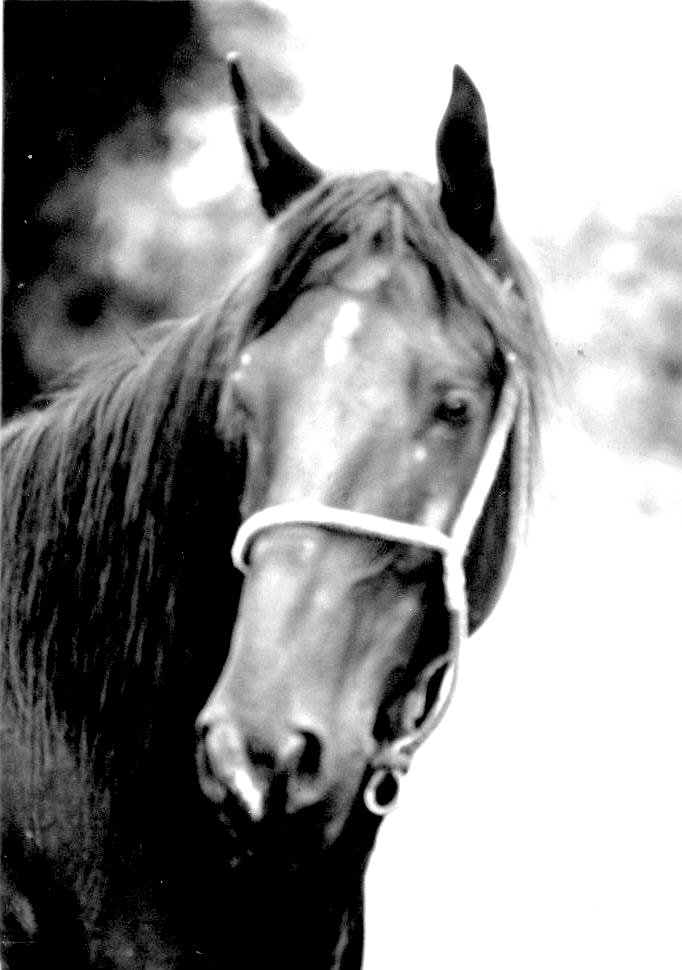
NOT LONG AFTER I returned to college, Mama hired Landis Spurbeck to deliver and stack hay in the barn. Landis was the old cowboy who had told me Prince needed to be broken. “You got to teach him who’s boss,” he had advised.

Landis drove his pick-up truck loaded with bales of hay to the barn door and carried one bale at a time into the barn for stacking, and of course, while doing this, loose hay fell to the ground, and of course, the horses were eager to munch on this hay. Landis didn’t mind working around Joe and the ponies, but he was afraid of Prince and would wave his arms and yell to frighten him away. Then, if Prince remained near the truck, Landis threw stones at him. 

“That big black horse has the devil in him,” Landis told Mama. “He’s a five-year-old stallion. Should have been gelded two years ago. He’s dangerous! It won’t be long before he starts killing your sheep and goats. I’ll castrate him for you.” Landis had worked on ranches in Texas and knew all about breaking horses and castrating stallions. 

Mama phoned to let me know about Landis’ offer. “I checked with the vet, and he agreed that it was best to have Prince gelded as soon as possible. He said that stallions can become troublesome.”

“Yeah, I know,” I replied. “Sandy’s uncle told me the same thing, but he was so well behaved this summer that I didn’t even think about it.”

“He has changed, seems more aggressive. I’ve seen him chase the goats.” Mama replied. 

“He’s probably just playing, but you’re right. It’s best to have him gelded. When will the vet be able to do it?” 

“Well,” Mama paused before answering. “The vet’s fee is a lot, more than we can afford, so I accepted Landis’ offer.” 

“Landis? When? Did he tell you how he planned to do it?”

“He said he’ll have a couple of fellows he knows help him sometime this week. I assume they’ll have to lay him flat and tie his legs.”

After our conversation, I took a walk and thought about Prince being lassoed and thrown to the ground, about his legs being tied, about Landis using a sharp knife to castrate him. It was September and I was on a college campus six hundred miles from home. In my mind I sobbed, I’m sorry Prince. I should have taken care of this when I was home. I didn’t think about it. I’m sorry I won’t be there. 

Mama phoned on Thursday to let me know that Landis had attempted what he said he would accomplish. “They lassoed his head and legs and pulled him to the ground. At first, Prince struggled wildly but eventually stopped and just lay on his side. Landis’ two helpers kept the lassos pulled tightly on his legs to keep him from kicking when Landis started cutting. Landis had almost finished when Prince surged forward, kicked and sent Landis flying and his helpers running. Prince stood up and hobbled around until the lassos fell off. Then he ran to the far end of the pasture. Landis was limping pretty badly when they left.”

“That sounds awful!  So, is he castrated now?”

“That’s the problem, Landis said he didn’t get everything, but he wasn’t going to try and finish what he started. He said he didn’t want to risk getting killed.”

“That means he’s still a stallion?” 

“Well, he’s partly a stallion. Landis admitted that he botched the job.

 He said that now Prince is a proud-cut gelding, a gelding that thinks he’s a stallion.”

Before hanging up the phone, I said, “Tell Prince I’m sorry.” 

 In October, I returned home during the mid-semester break. As soon as Mama parked the car and before carrying my suitcase to the house, I hurried to the pasture to greet Prince and Joe.

As before, they lifted their heads, whinnied softly and began walking toward me, Joe limping badly as he walked. “Wait. Let me get you some grain,” I said, as I turned to go back to the house, but Mama, knowing that I would return for oats, came carrying some in a bucket. Joe and Prince eagerly accepted the treat and stood quietly while Mama and I stroked their necks. “Have you been chasing any goats lately?” I asked Prince.

“No,” Mama said. “He stopped doing that after his ordeal.”

 “Well, maybe he’s not a proud-cut gelding after all.”

 “Maybe,” Mama agreed. “But one thing has changed, he is very frightened of men. When Ted visited a couple of weeks ago, he couldn’t catch him even with grain.”

 “Well, men weren’t kind to him. It’s understandable that he would be afraid.” 

(This is an excerpt from the memoir, Hoofbeats and Heartbeats, a book about the author’s teen years and her two horses. It was written for those who love reading horse stories. It is available on Amazon.)

Home Birth

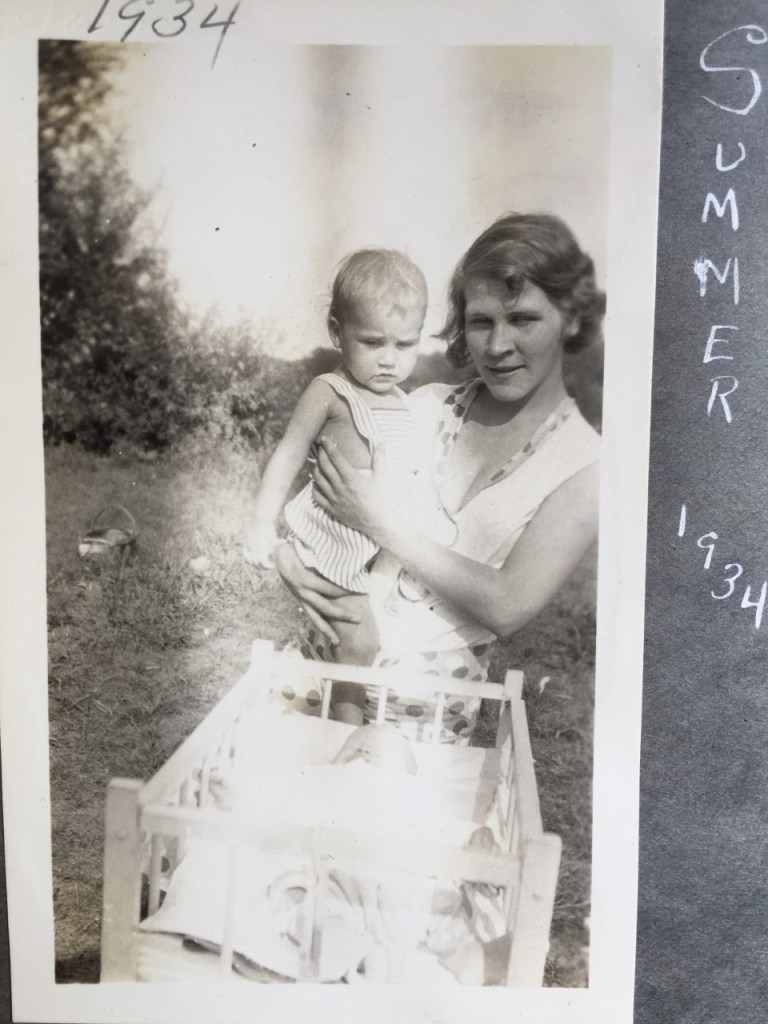
RUTH WOULD ATTEST to the fact that nursing does not prevent pregnancy, since she conceived the couple’s second child while nursing, a year and a half after Elizabeth’s birth. And so, it was that on a hot summer day nineteen-year-old Ruth called from the cabin door, “Charlie, I think it’s time! You better get Doc Perkins!”

Charlie had been adjusting the tractor carburetor with a small wrench when Ruth called. He slipped the wrench in his pocket and hurried to her. “Are you sure?” he asked.

“I’m sure,” Ruth answered.

Charlie grabbed the car keys hanging from a nail beside the door, kissed Ruth, and hurried to undo the boat. While poling across the river, he spotted one of his buddies, Johnny Kamaski, wading along the shoreline, fishing. Johnny was about Ruth’s age.

“Hey, Johnny,” Charlie called. “Ruth’s gone into labor. I’m getting Doc Perkins. Would you go over and stay with her?”

“What?” Johnny asked.

“Go stay with Ruth. She’s going to have a baby,” Charlie repeated.

“Oh, okay. Okay, I guess I can,” Johnny replied nervously.

BETWEEN LABOR PAINS, Ruth prepared for the birth. Though the day was hot, very hot, she started a fire in the woodstove and heated water, covered the bed with layers of newspapers and placed clean towels made from a discarded flannel bedsheet at the foot of the bed and two pillows at the head. While she did this, toddler Betty watched from her crib, and Johnny Kamaski watched while standing in the open door.

Ruth was at the kitchen table when her water broke. “Oh!” she exclaimed. “I guess I’m having this baby now!” She waddled to the bed, lifted herself onto the newspapers, and braced herself against the cabin wall as she recalled Doc Perkins’s words, “Bear down. Bear down.” She bore down, and her second child was born.

“Johnny,” she said. “You have to cut the umbilical cord.”

“What?” Johnny questioned in disbelief.

“Take the scissors off the table and cut that,” she said while pointing to the cord connecting her to the baby. Johnny’s face turned a pale green as he gingerly lifted the fleshy cord and snipped it.

“Now tie it,” Ruth directed. “Tie both ends.” Johnny’s hands trembled, but he did as he was directed. Not long after the birth, Doc Perkins arrived with Charlie.

“Well,” he said. “Looks like you managed just fine. Very resourceful. Very resourceful.”

When Ruth told the doctor that Johnny had cut and tied the umbilical cord, Doc Perkins said, “Oh, that wasn’t necessary. It could have waited. The fluid in the cord turns to gel once exposed to air.”

And so it was that Charles Leroy, Jr. was born on July 28, 1934. From that day forward, Johnny Kamaski was known by many as Doc Johnny.

Swamp Spruce

THE FIRST WEEK of December, Papa came home for several days before having to haul a house trailer to Florida, and while he was home, he proposed cutting some of the spruce trees that were growing in a swampy area north of the pasture. “I can haul them to Illinois and sell them for Christmas trees. Ten trees, each ten dollars, an easy hundred,” he calculated, and while looking at me, he added, “You can ride on Joe and pull them home in a tarpaulin.”

“It’s mighty swampy down there,” I said. “Last summer Joe sunk in muck when we tried to explore that area. 

“It’s winter now, and the swamp is frozen,” Papa replied. 

So, on a sunny cold morning, Papa and Ted walked to the woods with Papa carrying hand axe and Ted carrying a Swede saw, a saw with a large toothed blade attached to a rounded metal arm. Shortly afterward, Joe and I followed, Joe wearing a harness and me carrying a canvas tarpaulin and tug lines, ropes that are fastened from the harness to the load being pulled.  

Papa was right, the swamp was frozen and it didn’t take long for Joe and me to reach the spruce and tamarack thicket beyond the swamp edge. Grey and brown tamarack branches and trunks stood out against the green of spruce boughs. The tamaracks had lost their needles and looked dead, but I knew they weren’t. I broke off a twig and examined its bud scars. “New needles will poke through these little bundles in the spring,” I informed Joe. “It’s like magic.” He just kept plodding through the frozen swam moss. 

Ahead, I could hear Papa and Ted talking. Then Papa started chopping. Shortly afterward, I watched as a spiraled spruce tree disappeared from where it had stood among other spiraled tree tops. When Joe and I reached the spot where it had stood, Papa had only cut the top off and was trimming branches. The topless tree lay half covered in snow. I looked around at all the spruce trees. They were all very tall, about the height of a telephone pole, and they all had beautifully shaped tops, perfect Christmas-tree-shaped tops. “Aren’t there any shorter ones?” I asked. 

“No, the underbrush is too thick, they have to grow tall to get sunlight,” Papa explained. “There are plenty of them. We’ll cut just ten.”

“Make that eleven,” Ted called. “We need one too.” He was already sawing at the base of another tree with the Swede saw. 

I slid from Joe’s back and helped Papa spread out the tarpaulin. “That’s one,” said Papa as he laid  a nicely shaped Christmas tree on the tarp. 

“Here comes another,” Ted announced as the tree he had been sawing toppled to the ground.          

After cutting and trimming a third and a fourth tree, Papa said, “The snow is pretty deep. Four is about all Joe should drag out at one time. Take these home and when you return, we’ll have four more ready.” While saying this, he wrapped the tarpaulin around the trees and tied a rope snuggly around the load. He then fastened the tug lines from Joe’s harness to metal rings on the tarpaulin and boosted me onto Joe’s back. Then I headed for home.  Earlier the sun had been shining, but now it was cloudy and light snow had started to fall. 

While riding, I thought about the first time I had put the tugs on Joe. Papa had brought them home with a harness, another a gift from Mr. Altman. He told Papa that he thought Joe would make a good cart horse, and Joe did. During the summer, Ted and I made a cart out of an old lawnmower. After removing the mower blade and placing a wooden box over the engine, we fastened tugs to the handle and took turns sitting on the box while being pulled by Joe. We called it our lawn mower buggy. Ted and I also had Joe pull us on snow skis, alternating turns riding or being pulled. The one being pulled held onto the tug straps. Tugs, I thought to myself. That’s an appropriate name since they are used for tugging things.

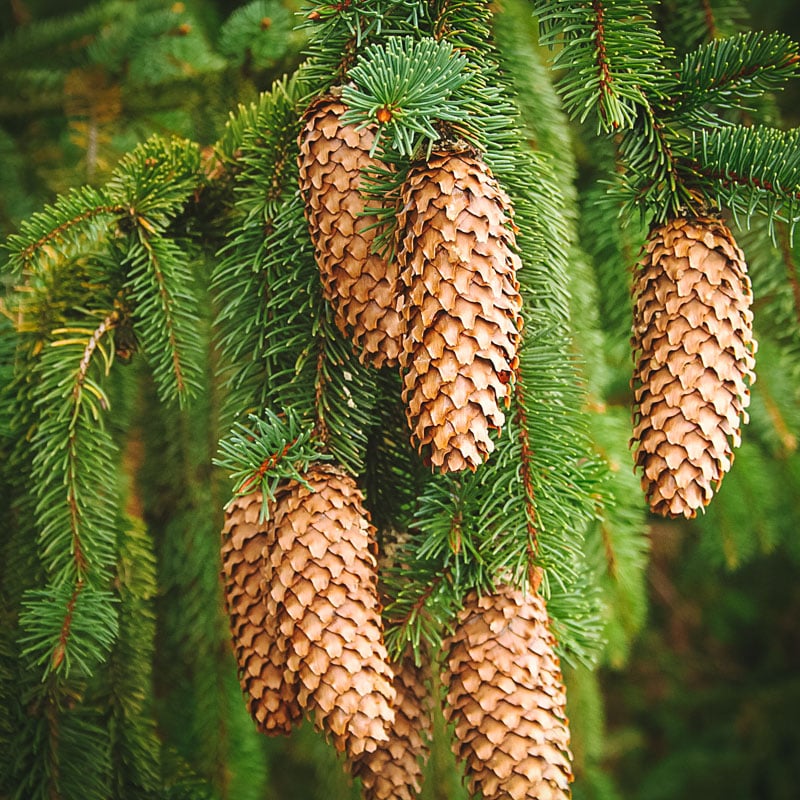
When I arrived home, I untied the tarpaulin ropes and leaned the trees against the garden fence. Mama came from the house wearing a heavy sweater and stocking cap, and after looking at the trees said, “They’re shaped perfectly, and look, they have little pine cones on their top branches.” 

“All the spruce trees are like that,” I replied and then added, “All the tops of the spruce trees, that is. Papa chopped down very tall scraggly trees just for their tops. He said they’re like that because of the thick underbrush, only the tops of the trees get sunlight.” 

As we talked, I folded the tarpaulin and laid it and the tug straps over Joe’s withers before Mama boosted me onto his back. 

“Wait,” she said. “I baked oatmeal cookies. You can take some with you. They’ll taste good about now.” She hurried into the house and returned with the cookies in a brown paper bag. 

The wind had picked up and it was snowing more heavily when I turned Joe back onto the trail to the spruce swamp. 

I could smell the cookies but didn’t take one. I didn’t want to risk having snow blow into the bag. I bent my head down and leaned over Joe’s withers to keep gusts of snow from blowing into my face. 

When I reached Papa and Ted, they were standing with their backs to the wind. Ted turned and called, “What took you so long?” 

“Oh, I went inside and read a book and Mama gave me a cup of hot chocolate and that made me tired so I took a nap,” I answered sarcastically.

And Ted sarcastically replied, “That’s what I thought.” 

“We’re going to call it a day,” Papa interrupted. “We cut four more before the snow made it impossible to see the tree tops. We’ll wrap these in the tarpaulin and you and Joe can head for home.” 

“Mama sent some oatmeal cookies,” I said while handing the bag to Ted. “Now you won’t starve if you get lost on the way.”

By the time the tree tops were snug  in the tarpaulin and the tug lines fastened to Joe’s halter, the heavy snow had become a whiteout. 

“I can’t see the trail!” I yelled to Papa.

“Just let Joe find the way!” he called back.

“Okay, Joe! Home! Let’s go home,” I shouted into the blowing snow. After entirely wrapping my face with my scarf, I leaned over Joe’s withers and rested my head on the side of his neck. Again, I shouted, “Home Joe! Home! You know the way!” 

I could feel the tug straps pulling the tarpaulin. I could also feel the warmth of Joe’s back and thought about how much better it was to ride bareback in a blizzard.  I also thought about Papa and Ted finding their way home. They’ll be okay, I told myself. Papa is a walking compass. He never gets lost.

When Joe eventually stopped, I sat up, uncovered my face, and looked around. We were standing at the pasture gate. “You did it, Joe. You did it,” I said softly. 

After unfastening the tug lines and removing the halter, I walked Joe to the barn and put him in his stall. He nickered to Lovey while I brushed the snow from his coat. “Yes, tell her all about it, Joe,” I said while filling his hay rack with fresh hay. “Tell her how you found your way home all by yourself.”                                                                                                                 

At the back door, I kicked snow from my boots and used a boot jack to pull them off. When I stepped into the kitchen, I was greeted with warmth and the smell of fresh bread and vegetable soup. Papa and Ted were in the living room sitting close to the wood burning stove. 

“Good to see you made it home,” Papa said. “We saw the tarpaulin and thought you were probably in the barn with Joe. Did he find the way on his own?”

“Yup. I wrapped my scarf around my head and leaned forward out of the wind. I had no idea where we were going. His body kept me warm too.”

Two days later, after loading the spruce trees into his truck, Papa told Mama, “I’ll be back in three weeks, expect me a week before Christmas.”  Then he headed for Indiana where he planned to pick up a house trailer that he was scheduled to haul to Florida. While on the way, he also planned to stop and sell the trees to his Illinois buddies and their friends.

After Papa left, it continued to snow almost daily for two weeks and then it stopped. Gray skies changed to deep blue and the temperature dropped. It didn’t just drop, it crashed to 44 degrees below zero! We had been told that when it dropped near that temperature school buses wouldn’t start, and we were advised to listen for school closings on the local radio during such weather. Ted and I got up early on bitterly cold mornings to listen for these reports, and when it was announced that there would be no school, we jumped around laughing and clapping our hands. Ted was happy because he would be able to sleep in and read when he wasn’t sleeping. I was happy because I would be able spend a whole day with Joe.

Two weeks before Christmas, Ted and I convinced Mama that it was time to put up the tree, and when we went to town, she bought a tree stand and a box of tinsel. We had never needed a tree stand before because the only Christmas tree we ever had was a live one growing in a bucket. That was when we lived in Illinois. Illinois was corn country not spruce tree country, and Christmas trees were expensive. So, instead, we had bought a bucket tree. At Christmas time, a green towel was wrapped around the bucket and tiny baubles were hung on the tree. It was small, about a foot tall. But this year we had a real Christmas tree. 

After securing our real Christmas tree in the stand and setting it in a corner of the living room as far from the wood burning heating stove as possible, we were faced with the challenge of decorating it. All that we had was the box of tinsel. 

While we were carefully placing tinsel on the tree, Ted asked, “Do you smell cat pee?” 

“I sniffed and replied, “Yeah. Maybe Bart sprayed it outside.” Bart was a stray tomcat that sprayed on things he thought were interesting. 

“Well, there’s nothing we can do about it now,” Ted said, and I agreed. By the time we finished hanging the tinsel, the smell had disappeared or we had grown accustomed to it. 

We didn’t have bobbles or lights, but we had paper and flour. We mixed the flour with water to make paste and cut the paper into short strips that we linked together into a long paper chain. We kept making links until the chain was long enough to wrap around the tree several times from top to bottom. We also cut symmetrical angels by folding three-inch squares in half and cutting out the shape of a half angel. When the paper was opened it became a full angel. Mama taught us how to do this, and her grandmother, Ted’s and my great-grandmother, had taught her. The three of us also cut six-sided snowflakes. We covered the tree with snowflakes and angels. At night they reflected the lamplight beautifully.

Several days after decorating the tree, Red Monzell, a grizzled old bachelor who sold firewood, stopped to ask Mama if we needed any. 

“We’re okay for now, but stop back in a week when Charlie is home. He might want to get some more.” Mama said. 

She invited Red into the kitchen for a cup of hot cholate, and he gladly accepted her offer. 

“Would you like to see our Christmas tree?” I asked. 

“Sure would,” he replied. Before going into the living room, Red looked at his boots. He had knocked most of the snow from them but a little remained. 

“They’re okay,” Mama said. “The snow is clean.” 

Red followed Ted and me into the living room and stood looking at the tree for a while before speaking, “Did you know that’s a swamp spruce?” he asked. 

“Well, we got it from our swamp. Papa cut some to sell to friends in Illinois for Christmas trees,” I replied. 

“How long ago did he cut them?”

“About three weeks ago. But we just put ours up yesterday.” 

“Sorry to tell you this, but swamp spruce don’t make good Christmas trees. They look nice when they’re first cut, but their needles drop off and sometimes they smell skunky, like cat pee.”

Ted and I looked at each other and nodded.

“Some people call them cat spruce because of the smell,” he continued. “Your tree will hold its needles because you kept it outside in the cold, but expect them needles to start dropping in about a week.” 

After Red left, Mama, Ted, and I talked about our cat-pee Christmas tree and wondered whether the trees Papa had taken to Illinois still had their needles and whether they also smelled like cat pee.

Five days before Christmas Papa had not returned home. We didn’t have a phone, so there was no way to contact him and learn the reason for his delay or find out when to expect him. Ted and I were concerned about gifts, receiving them and giving them. When we told Mama this, she said, “Well, I don’t have a lot of cash, but I can give you each five dollars to buy gifts.”

“That’s enough,” Ted and I agreed. “When can we go shopping?” 

“How about tonight? Stores will stay open until nine, and you’ll do all of your shopping at Ben Franklin’s.” Ben Franklin’s was a department store that sold everything from nails to nylons. 

Of course, Ted and I eagerly agreed.

Brightly colored Christmas lights and spruce boughs hung across Main Street, and the sidewalk was filled with shoppers. Mama parked on a side street and we quickly walked to the department store. Once inside, Ted and I headed straight for the items we had earlier discussed and decided upon, a pair of lumberjack socks for Papa and a potato masher for Mama. We pooled our money to buy these, and after equally dividing what was left, we went our separate ways to buy gifts for each other. I bought Ted a small single-blade pen knife and he bought me a 48-count box of Crayola crayons. With the little change we had left, we bought a box of candy canes to hang on the tree. 

Two days before Christmas, Papa came home and that same afternoon, he 

and Mama went into town to pay for the gifts that had been put on lay-away. Ted and I stayed home and wrapped our gifts with lunch bag paper that we flattened and decorated with crayon-drawn Christmas trees. 

“I wonder if Papa knows whether the trees lost their needles,” I said.  

“Yeah, me too,” Ted replied.

We didn’t have to wonder long. That evening Papa told us that a buddy contacted him and told him to stop and talk to his Christmas tree customers. “That’s why I was late getting home. I had to go to each home and return the money they had paid. Every tree had lost its needles, and some complained that the trees smelled like cat pee.” Then he added, “It was embarrassing.”

Ted and I told Papa about Red Monzell’s visit and what Red had said about swamp spruce losing their needles. 

“They’re also known as cat spruce because they smell like cat pee. That’s what Red said,” Ted added.  

“Hmmm,” Papa replied. “I guess we can chalk this up as a lesson. No more cutting swamp spruce for Christmas trees.”  

Compassionate Service

Throughout my childhood and teen years, I remember my mother helping people who were poor. It wasn’t because she was wealthy, it was because she understood what it was to be poor. This photo reminds me of the old men she helped. They lived on what we called Bachelor Avenue, a country road that had several one-room shanty bachelor homes. When Mama took baked goods to them, my brother and I accompanied her – this fellow is dressed the same as the men she helped, and the stove is also similar. Typically, there was a wood-framed key clock and maybe a faded print hanging on a smoke-darkened wall. Clothing was hung on pegs or nails above a quilt-covered cot. Cabins were lit by kerosene lamps, and typically a water bucket with ladle was on a corner of the stained kitchen table. The men all reused their dishes without washing them, just turned them upside down on the table to prevent the fouling of mice. Each cabin smelled of wood smoke and tobacco.

Following is a related excerpt from my mother’s biography, Nettles and Roses, A Story of Resilience and Redemption (available on Amazon ISBN 979-8-711962-90-8).

BACHELOR AVENUE NEAR the small town of Ladysmith, Wisconsin was a gravel road that cut through the woods and joined two main county roads. It was appropriately named because three old bachelors lived along this road, each in his own little one-room shack. Their names were Silas, Everett, and James. We first met Everett when he was hitchhiking to Ladysmith. Mama always picked up hitchhikers, especially if they looked poor, and Everett looked poor. His jacket was frayed, and he wore checkered wool logging pants. He smelled of wood smoke and dirty hair.

After Everett seated himself in the car, Mama asked, “What’s your name?” Everett didn’t reply. He just sat looking straight ahead.

“We are new to the area,” Mama continued. “We moved here last September. We love it. How long have you lived here?” Everett didn’t reply. He just sat looking straight ahead.

“Maybe he’s deaf,” I said softly.

“Can you hear me?” Mama asked loudly. “What’s your name?”

“Everett. Everett Palm,” he answered.

“We moved here last September. We love it. How long have you lived here?” Mama repeated loudly. Everett said nothing. It was apparent that he was a man of few words.

“Where do you want to be dropped off?” Mama asked loudly.

“The A&P Grocery,” Everett replied.

“That’s where we’re going. If you want, we can give you a ride home.”

“I’d appreciate it,” Everett replied softly with a slight nod of his head. When we left the store after buying groceries, Everett was waiting for us at the car.

“I’m glad you waited,” Mama greeted. On our drive back to Bachelor Avenue, Everett answered Mama’s questions with single-word responses or not at all, but when we stopped at his little home and he opened the car door, he looked at Mama and said, “Thank you for the ride. I appreciate it.”

“You’re welcome,” Mama replied.

Our first interactions with Silas and James were similar, but over time, all three came to value our friendship. Ted and I accompanied Mama when she stopped at their small shanty homes. At first, she dropped off oatmeal cookies. Then she gave them fliers describing the message of Jesus along with the cookies. She made certain each had a Bible. She also invited them to church, and occasionally one agreed to attend. I remember Silas walking to the car, carrying his Bible, with his hair slicked back and wearing a wrinkled grey suit coat.

Mama also befriended Virginia Barns. Virginia was a widow who had a small farm with ten cows, which she milked by hand. Having no car, she drove a tractor to town. She was tall and skinny with long grey hair that hung to the middle of her back. Her face was weathered and dramatic. She must have been beautiful when she was young. She typically wore a long coat and skirt and tall rubber farm boots. If the school bus happened to pass her driving to town on her tractor, some kid would murmur softly, “There’s the witch,” and everyone would stop talking and turn to stare at her. Her unpainted double-storied house was spooky too. The uncurtained windows looked out from the house like vacant eyes.

I don’t know how Mama made Virginia’s acquaintance, but she did, and occasionally when we drove to town, we stopped to visit. The inside of her house was as stark and grey as the outside, without rugs or comfortable furniture. Hanging in her kitchen were braided strings of onions and garlic, bundles of dill and herbs. Preserved jars of green beans, beets, and tomatoes added color to her bleak décor, but the most unusual feature was a tall undecorated Christmas tree, a balsam with wide-spreading branches, positioned between the kitchen and sitting room, still appearing fresh four months after Christmas.

“I really don’t like cutting an evergreen, but it wouldn’t be Christmas without one, so I try to extend its beauty as long as I can,” Virginia explained. I understood why Mama liked her; Mama was a collector of interesting people, and Virginia was certainly interesting. Their conversations focused mainly on religious topics. Ted and I would sit on straight-backed chairs listening as the two talked about eternal hellfire, a favorite topic because Virginia was a Catholic.

“I certainly wouldn’t want to have a child of mine suffer in purgatory or burn eternally in hell, and I’m merely a human being. God is the embodiment of love and compassion, and we are his children. Burning and torturing His own children just doesn’t make sense,” Mama would reason.

“Yes, that is sensible,” Virginia agreed. “But what if you’re wrong?”

“I’m not wrong. I can’t be wrong. If I’m wrong, then God is not perfect.” And so, the conversation would continue.

Mama also befriended Liz and Luther Breme. They had six children: Gladys was five, Pearl was four, Billy was three, Arthur and Dennis were two, and Matthew was ten months. The family was extremely poor, living in a long one-room shed without running water or electricity. The shed was set far back from the road in a low area among poplar trees and tag alders. Liz was a large Ojibwe woman who preferred living in the woods. Luther was a little man with a stubbly beard and unkempt light brown curly hair.

Again, I don’t know how Mama made their acquaintance, but she did. It is possible that she spotted them at the A&P Grocery and introduced herself. It is possible she said something like, “I can see your quiver is full. God has blessed you with beautiful children.” And the children were beautiful. Mama visited them in their home, taking Ted and me along only once. She sensed that Liz didn’t want two teens standing awkwardly in her shabby home. Of course, Mama talked with Liz and Luther about the love of Jesus, but her service with this family was to lift Liz’s spirit by gifting her curtains, rugs, and pretty dishes. When Mama baked, she made an extra loaf of bread or cookies to take to them. Mama was always at her happiest when helping a destitute family.

One day, Mr. Pederson from the Social Service Office came to our home. “Mrs. Towne,” he said, “Liz Breme is in the hospital with pneumonia. We were going to place her children with foster care, but she objected and asked to have you take them until she’s better. Would you be willing?”

“Of course,” Mama immediately replied. Then she added, “Just yesterday I found an old-fashioned baby cradle at a rummage sale. I felt the urge to buy it and did. Come look,” she said while leading him through the kitchen and into the dining room to show him the wooden cradle.

“How wonderful. Only a day after buying this, it will be blessed with a baby,” Mama beamed.

“I’ll let Mr. Breme know to bring the children,” Mr. Pederson said while walking to his car. That afternoon, Luther Breme brought his six children to our home, their clothes in a pillowcase, and left them in Mama’s care for two weeks.

Throughout her life, Mama cared for many individuals who were considered by most others as social burdens, and she became known for her compassionate service.

A Little Hairy Thief

Following is a chapter from the recently published children’s book title Daffy: A Monkey’s Tale (available on Amazon).

Pooping on the classroom piano wasn’t the only behavior that gave Daffy notoriety. 

He was a free-range monkey, going in and out of the house whenever he desired through a small window in Ted’s bedroom. He especially enjoyed exploring the side yard while dragging his best friend, Ginger Cat, around with him. He couldn’t 

carry her; she was too large. So, he dragged her. Surprisingly, she did not object.  

He also enjoyed climbing the trees that were close to the house, an apple tree and a basswood. 

Yes, his was a life of freedom and adventure until he one day when he wandered about a block away to the neighbor’s house.  

Mrs. Brumble was elderly and overweight. She heaved herself slowly between her bedroom, kitchen, and a large, overstuffed chair in the living 

room. One morning after preparing eggs, bacon, 

and toast, she settled herself for her morning feast, and that’s when it happened.   

“Tell me everything that you can remember exactly as you remember,” the officer said to Mrs. Brumbles. 

“Well, I had just settled down to eat when the screen door slowwwwly opened. I looked up to see who was coming in, but no one was there.”  

“You didn’t see anyone at first?” the officer

questioned.  

“No, but the door kept opening wider, so I 

looked down, and this little man was standing there! He had brown hair all over his skinny little body! Why, it scares me to think ’bout it! He had little beady black eyes and a funny nose.”  

“Then what happened?” the officer questioned. 

“I screamed!” Mrs. Brumbles answered dramatically.                                                                                                                                            

“And?” The officer continued to probe. 

“As soon as I screamed, that little man ran 

across the room and jumped up on the table really 

quick! Jumped up just like that.” Mrs. Brumbles demonstrated this by lifting her hands up above her head.  

“And then?” the officer probed again.  

“He ran right across my table, grabbed a piece of toast, held it with his mouth, jumped down and ran out the door!” Mrs. Brumbles exclaimed while gesturing from the table to the door. “Oh, I forgot,” she added. “He had a long tail.”  

“Can you remember anything else?” the officer asked.

“That’s about it,” Mrs. Brumbles answered.

“But if I were you, I’d go over to the new people next door. They’re from Chicago.”  

Ted and I were in the garden with Mama when the police car pulled into the drive. An officer stepped from the car, settling his cap on his head while walking toward us.                                             “Good morning. I’m Officer Tanner,” he 

greeted. “Your neighbor, Mrs. Brumbles just made

a complaint that a little man with a long tail stole

a piece of toast from her breakfast table,” he 

explained. Then he asked, “Are you the people who have a pet monkey?” His son attended the elementary school, and Officer Tanner had heard about Daffy pooping on the top of the piano in Mrs. Taylor’s classroom.  

The next issue of the local newspaper printed a story titled “Monkey Business” reporting the theft of a piece of toast. The story firmly established my family’s quirky reputation.  

Mr. Butler and Miss Lilly

”Jack, leave Boots alone. Miss Lilly will get upset if you frighten her cat, and she’ll be ornery,” Mr. Butler grumbled to his dog. 

Jack ignored the grumble and barked loudly while racing up the walkway. When the cat yowled loudly, the door flew open! “You know better than to bring that beast here!” Miss Lilly harangued. 

“He’s my partner,” Bill grumbled. “Where I go. He goes.”

“Well Boots is my baby,” Miss Lilly whispered soothingly while cuddling the cat and glaring at Jack. 

“Come in! Come in and shut the door. You’re letting the cold in,” Miss Lily ordered. 

Mr. Butler stepped inside and leaned his walking stick in a corner while hanging his hat and coat on hook. 

“I came as soon as I got your message. What’s wrong? It doesn’t look like you need wood.” 

“No, I’ve got plenty of wood, thanks to you,” Miss Lily replied. “It’s Vincent.” 

“Vincent?” Mr. Butler questioned in surprise.

“Well, he’s been stopping by too often and it makes me feel uncomfortable.” 

“Come. Sit. Sit.” Miss Lilly directed as she continued. “Two days ago he brought me a bag with five apples and asked me to bake a pie for him.” 

“That seems reasonable,” Mr. Butler mumbled. “Everyone knows your apple pie is the best.” 

“Thank you, Mr. Butler. You always say the kindest things,” Miss Lilly replied. Boots nestled comfortably on her lap. 

“But that isn’t all. The next day when he came back for his pie, he suggested that we each have a piece, enjoy it with a cup of coffee.” 

“Sounds sensible to me. That Vincent is a sensible man.” 

“You men always stick together,” Miss Lilly whispered defensively. 

“It wasn’t that he asked for a piece of pie, it’s what he did when I gave it to him!” 

Mr. Buttler raised his eyebrows questioningly. 

“When I handed him the plate, he took my hand and smiled at me.” 

“Sounds like he was showing his gratitude,” Mr. Butler mumbled. 

“Then, then,” Miss Lily continued, “He told me I was pretty. Maybe I was pretty years ago, but I know I’m not now. That Vincent is a liar!” 

“Miss Lily, don’t get upset with me, but I have to disagree. Vincent is right, you are pretty,” Mr. Butler mumbled. 

Miss Lilly blushed and smiled slightly, “Do you think so, Mr. Butler?” 

He tilted his head and smiled shyly while slowly nodding. 

“What is it you want me to do?” Mr. Butler mumbled. 

“Tell Vincent that I think he’s a nice man but he mustn’t get notions about me, and tell him not to visit more than once a month.” 

“Sure seems like a strange thing for me to tell Vincent,” Mr. Butler mumbled. 

“You have to. I can’t,” Miss Lilly persisted. 

“Maybe it would be best if Jack and I left. Maybe you don’t want us to visit but just can’t say it,” Mr. Butler mumbled. 

“Ohh, no, no!” Miss Lilly contended. “Boots and I love having you and Jack visit.” 

“That’s good. Jack and I enjoy your company too,” Mr. Butler mumbled. 

The two sat quietly for a few moments before Miss Lilly advised, “You had better go. The snow is supposed to get heavy.” 

While picking up his walking stick, Mr. Butler turned to Miss Lilly and mumbled, “I’ll talk to Vincent.” 

Miss Lilly smiled and, while tucking four napkin-wrapped cookies in his coat pocket, said softly, “Now you come back, Mr. Butler. You and Jack come and visit whenever you want.”

Three days later, when Mr. Butler and Jack walked the snowy path to Miss Lilly’s, he was carrying five pie apples in a bag and wearing a contented smile.