
“John. John,” I repeated softly while bending down and looking into my husband’s face.
“Just let me sleep. I need to sleep,” he mumbled.
“Sit up,” I urged. “You’ve been lying flat for four days. At least sit up for a little while.”
He didn’t reply.
This was not like John. He is one of those guys who gets up early, cuts and splits firewood, gardens, fishes, hunts deer and processes the meat, does his own auto repairs. Typically, at this time of year he would have been spending hours ice fishing thirty feet from our dock, a large dock stabilized by 13-foot tamarack poles, poles that he cut and pounded into the lake bottom while balancing in a canoe. Ice fishing is his favorite winter sport; however, it was mid-March and he didn’t have enough energy for fishing and hadn’t since December.
“Sit up and drink this,” I persisted while offering a glass of water.
He opened his eyes and looked at me.
“You need to at least sit up,” I repeated.
I pulled the covers back and slipped my hand beneath his head.
“Come. Sit on the couch.”
Turning on his side, he slid his legs and feet off the bed. I tried to help him, but he waved me aside and slowly stood up and then staggered to the couch.
“Everything is blurry,” he whispered.
A week earlier he had diagnosed his weakness as a repeat of Covid. He had had it twice before and managed to sleep his way to recovery. Now he sat at the end of the couch bent over and looking drained.
“This isn’t Covid,” I said. “Something else is going on. You need to go to the emergency room.”
Instead of answering, he got up slowly and shuffled to his desk, picked up his checkbook and a pen and returned to the couch. “Okay,” he agreed. “On the way, I need to make a withdrawal from the bank.”
I watched as he attempted to write a withdrawal check.
Looking up with a frightened expression on his face, he asked, “How do you spell eight?” Then he added, “There’s something seriously wrong with me. I can’t remember how to spell eight.”
“E i g h t,” I replied while leaning down to see what he had printed. His spelling wasn’t the only thing to be concerned about, he was also struggling with printing; he cramped the letters together. “Do you think you might have had a stroke?” I asked.
“Maybe” he quietly replied. “Everything is blurry.”
I helped him dress and walked behind him as he shuffled to the car. He also shuffled from the car into the emergency room where he sat while I registered him.
“What’s the problem?” the receptionist asked.
“He thinks he might have had a stroke,” I said.
My answer prompted a quick response from the urgent care team.Once in an examination room, monitors were attached, an inter-veinous drip was started, and a lab technician drew several vials of blood. Soon a doctor stepped into the room and asked questions while listening to John’s heart and lungs.
“What’s going on?”
“I don’t know,” John replied weakly. “I feel like I’m wading in mud.”
“The doctor turned to me and asked, “Does he typically have high blood pressure? Any heart problems?”
“No. Never,” I replied.
I could see from the heart monitor that he was slipping in and out of a-fib and his blood pressure was 190 over 110.
“Is he taking any heart medication?”
“No. Never has. He’s rarely sick, and when he is, it’s usually not for long. But this is different. He’s had no energy, been sleeping mostly for almost two weeks. I insisted that he come into the hospital today.”
Turning to John, the doctor explained, “Lab results show that you have hypercalcemia, too much calcium in your blood. Way too much calcium. A person’s calcium level is typically between 7 – 9. Yours is over 14. Ten to eleven is considered mild. Yours is at a crisis level. Dangerously high.” Pointing to the drip bag,the doctor added, “It’s being flushed out now.”
“What would cause it?” I asked.
“Several possibilities. Tests will tell.”
After the doctor left, I said to John, “Too much calcium. Do you think it could the ant-acid tablets?”
“Could be,” John replied weakly.
“They’re about the only thing you’ve been eating,” I added.
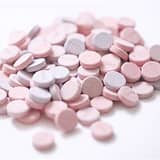
And that was true. For years John battled acid reflux. To neutralize the acid, both during the day and at night, he sucked on ant-acid tablets. It wasn’t unusual for him to ingest twenty or more large tablets daily. Thinking they were safe way to neutralize acid, he ate them like candy.
During the next hour, John had a CAT scan, a lung x-ray, and more blood tests.
After studying the test results, the doctor reported that the tests were inconclusive and that he had ordered an MRI for the following day. Before he left, I asked, asked, “Do you think eating too many ant-acid tablets could have caused this?”
“It’s a possibility, but not typical. Too much calcium in the blood is usually caused by cancer; in men your husband’s age, possibly prostate cancer.” Then, turning to John, he said, “You won’t be going home for several days. You’re very sick. If your wife hadn’t insisted that you come in. You would have died. She saved your life.”
After the doctor left, John and I sat quietly thinking about the doctor’s last comment. Then John said, “I don’t have cancer.”As strange as it may sound, John is a staunch believer that every form of cancer can be prevented, not treated, prevented, by eating three almonds daily, and he faithfully followed this regime since first reading about it in a book written by Edgar Cayce, a medical medium, when he was twenty-three; he was now eighty-one.
At home that evening, I searched the internet for causes of hypercalcemia and read that, as the doctor had said, cancer was a primary. However, I also read that excessive calcium in the blood can be caused by taking too much calcium carbonate in the form of Tums® or Rolaids®. Additionally, taking vitamin D supplements along with calcium carbonate can, over time, raise calcium levels in the blood. Besides excessive use of ant-acid tablets, John took a vitamin D supplement every other day. Did this combination cause his hypercalcemia? Or did he have cancer lurking somewhere in his body?
By the time I returned to the hospital the next morning, he had already had an MRI. His breakfast tray was next to his bed, breakfast untouched. A nurse came in to switch his inter-veinous drip bag and record his vital signs.
“Did he sleep?” I asked.
“On and off,” the nurse replied. “He had to urinate every twenty minutes but barely passed any water. Was catharized. Now he won’t feel the urge to pee.”
When the nurse left, John grumbled, “Catharized? She should have said cauterized. Some nurse nearly killed me trying to stick that tube up my wiener. Then a different nurse took over and painlessly finished the job.”
Before I could empathize, the head nurse, a nurse practitioner, came into the room. “Good news,” she said. “The MRI detected no cancer and the drip flushed most of the calcium from your blood.” Then she repeated the ER doctor’s prognosis, “If your wife hadn’t insisted that you to go to the emergency room, you would have died. You’re still very sick. Plan on staying for the rest of the week.”
Before she left, I asked, “If the MRI, CAT scan, and lung x-ray showed no cancer, can we assume cancer isn’t the problem?”
“No,” the nurse replied. “There are other tests that must be run. We’ll be drawing more blood. Something caused your hypercalcemia.”
At this point John admitted his over-use of ant-acid tablets, that it wasn’t unusual for him to eat twenty a day. “Could ant-acids have caused the spike?” he asked.
She nodded slowly and replied, “It’s possible, but not typically the cause.”
John made steady progress recovering. By Thursday, his sense of humor had returned and many who entered his room left laughing. He told his nurses, “I must have died and gone to heaven because angels are taking care of me.” Also on Thursday, John’s clearing of his colon after being constipated for over a week also was a cause for laughter. His bowel movement caused the toilet to clogged and water, lots of water, flooded thebathroom and hallway. Nurses laughed as quickly they threw towels and blankets on the floor to sop up the water.
On Friday, after being discharged, John walked to the car wearing a urine bag. A week later, a urologist removed the catheter and liberated him from the bag.
Follow-up appointments included being seen by an oncologist. “Is there any sign of cancer,” John asked?
“No, the doctor replied, but something caused your calcium level to spike.”
“Could it have been taking too many ant-acid tablets?” I asked.
“Not typically. It’s usually caused by cancer. I’m scheduling a bone marrow biopsy.”
“Why?” John asked.
“To rule out any sign of leukemia or lymphoma.”
When a nurse phoned to schedule this appointment, John cancelled it. Also, after reading about possible side effects, he discontinued two drugs that had been prescribed, one for treating acid reflux and the other for constipation. Instead, he started drinking plenty of water and occasionally using baking soda to neutralize stomach acid. He also stopped taking a vitamin and zinc supplements.
Now, a month after the hypercalcemia ordeal, John’s energy level has returned. This week, he cut and split three dead trees to use for firewood. Yesterday, April 11th, he drilled holes in the ice next to the dock to determine whether it’s safe for fishing. It’s safe, and he is looking forward to catching a dinner’s worth of bluegills.
So, what did both John and I learn? Over-the-counter ant-acid tablets like Tums and Rolaids can be deadly; they are not to be taken excessively, definitely not twenty or more each day.
. . . and, John insists that taking three almonds a day, as advised by Edgar Cayce, will prevent cancer. However, John adds, “Cayce wrote that the almonds only prevent cancer but will not cure it.”
 As the Crow Flies